What Is the Best Prop Firm Trading Strategy to Pass a Funded Challenge
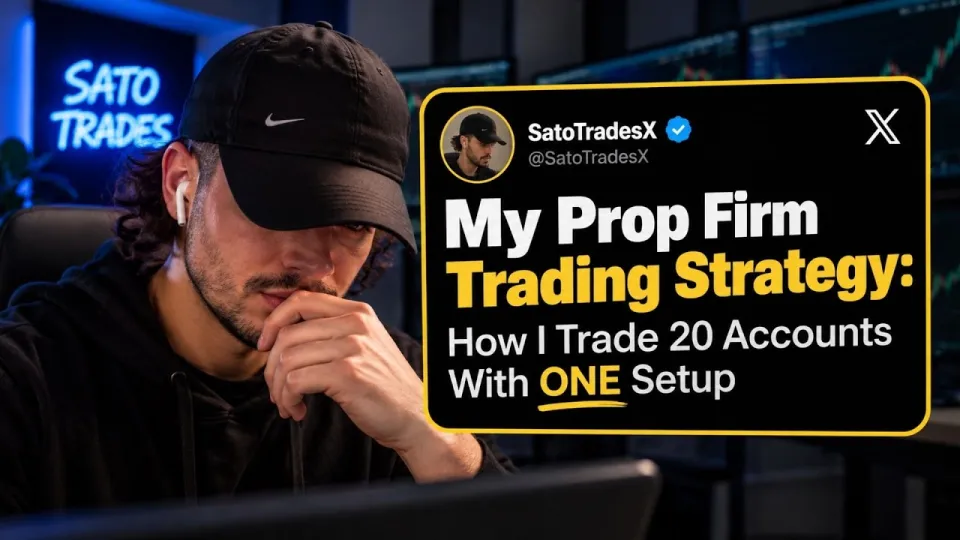
Video: Prop Firm Trading Strategy: How to Pass a Funded Challenge in 2026
· based on the channel Sato Trades
Key takeaways
- Use a mechanical trading system based on 1-minute futures charts for entries
- Focus on key daily and intraday levels for ES and NQ futures
- Strict risk management: fixed stop loss, take profit, and position sizing
- Trade with limit orders and leave them set to avoid emotional decisions
- Scale trading by managing multiple prop firm accounts with trade copiers
Prop firm trading strategy requires a disciplined, mechanical approach to successfully pass funded challenges and secure consistent payouts. The best strategy focuses on futures trading — especially E-mini S&P 500 (ES) and Nasdaq 100 (NQ) — using the 1-minute chart to identify precise entries. Combining key daily and intraday order flow levels with strict risk management rules creates a reliable framework for evaluation phases.
Key Components of a Prop Firm Trading Strategy
The core of passing any prop firm challenge is a mechanical trading system that minimizes emotional decisions. This means using predefined levels, setups, and risk parameters consistently.
- Identify Daily and Intraday Levels: Use daily high timeframe levels as anchors, then mark intraday support and resistance zones on TradingView or your preferred platform. These levels serve as potential areas for long and short entries.
- Use 1-Minute Chart for Entries: The 1-minute timeframe offers precise timing for entries when price approaches your marked levels.
- Set Limit Orders, Stop Loss, and Take Profit in Advance: Place orders and leave them to avoid impulsive adjustments during the session.
- Manage Risk Strictly: Use fixed stop loss sizes that comply with the prop firm’s rules to protect your funded account.
- Avoid Trading Against Market Structure: Recognize when the market structure signals not to trade, such as during unclear trends or high volatility spikes.
Mechanical Trading System for Prop Firm Challenges
A mechanical system means following a rule-based approach without discretionary deviations:
- Trade only setups that align with your marked levels and confluence areas.
- Use tools like grouped and hidden levels on TradingView to reduce clutter.
- Follow a checklist before entering trades: Is price near a key level? Does the market structure support the direction? Are risk parameters acceptable?
This approach reduces emotional mistakes and increases consistency, which is crucial for passing evaluation phases where rules are strict.
Risk Management Rules to Protect Your Funded Account
Risk management is paramount in prop firm trading. Typical rules include:
- Risk no more than a fixed percentage of your account per trade (often 1% or less).
- Set stop loss and take profit levels based on volatility and prop firm guidelines.
- Use limit orders for precise entries and exits to control slippage.
- Do not add to losing trades and avoid revenge trading.
Following these rules ensures you stay within the prop firm’s drawdown limits and maintain your funded status.
Handling Price Action During Trading Sessions
Understand how price behaves around your marked levels:
- Look for confluence with volume, order flow, or momentum indicators.
- Trade pullbacks or breakouts only when confirmed by structure.
- Avoid trading during news spikes or outside your preferred trading hours.
This tactical approach helps improve win rates and reduces unnecessary risk.
Scaling Your Prop Firm Trading Through Multiple Accounts
Successful traders often scale by managing multiple prop firm accounts simultaneously:
- Use trade copiers like Tradovate combined with software such as Tradecopia for synchronized order execution.
- Maintain the same mechanical strategy across accounts to ensure consistency.
- Monitor risk independently per account to avoid correlated losses.
Scaling enables increased payouts while diversifying risk across prop firms.
Useful Links
- Get daily ES & NQ levels and trading tutorials: https://satotrades.com/vip
- Best futures prop firms guide: https://satotrades.com/guides/best-futures-prop-firms
- Join the free Discord for daily levels and community support: https://discord.gg/Yt5PuQjXRp
- Trade copier software: https://portal.tradecopia.com/signup?via=SATO
Итог
Passing a prop firm funded challenge requires a structured, mechanical trading strategy focused on futures like ES and NQ. Key elements include precise level marking, a 1-minute entry timeframe, strict risk management, and consistent order placement. Scaling your trading via multiple accounts can increase payout potential. This approach, detailed by the Sato Trades channel, helps traders stop failing evaluations and trade professionally. For daily levels, setups, and mentorship, visit the Sato VIP site.
Source: Prop Firm Trading Strategy: How to Pass a Funded Challenge in 2026 · Markdown version
Questions & answers
What is the main timeframe used in the prop firm trading strategy?
The strategy primarily uses the 1-minute chart for precise entries in futures trading, especially with ES and NQ contracts.
How does risk management work in prop firm trading?
Risk management involves setting fixed stop loss and take profit levels, limiting risk per trade to about 1% or less, and following strict rules to avoid drawdowns that can cause account failure.
Can I trade multiple prop firm accounts simultaneously?
Yes, traders often scale by managing multiple accounts using trade copier software to synchronize trades, maintaining consistent strategy and managing risk independently across accounts.
What tools help with marking levels and reducing chart clutter?
TradingView features like grouping and hiding levels are recommended to organize key daily and intraday support and resistance levels, making it easier to read the chart and focus on high-probability setups.