7 rules for trading meme coins without losing your deposit
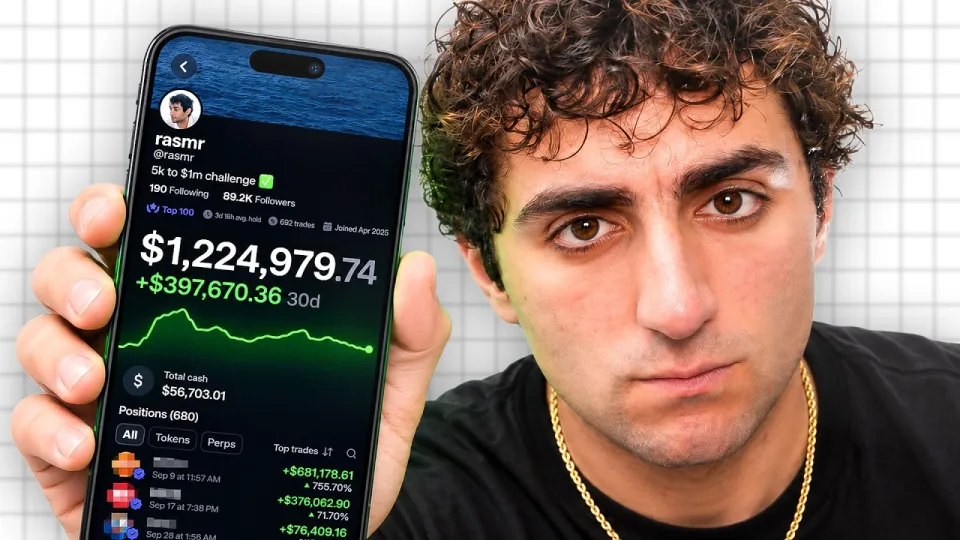
Video: 5 Years of Memecoin Knowledge in 12 Minutes
Need articles like this for your video? They help promote it on YouTube and Google — order them in the Telegram bot @sat_sit_bot. Articles with your video embedded are written and posted by the bot itself — on popular topical sites (no ads). Your first 50 articles are free.
· based on the channel rasmr
Key takeaways
- Meme coins are driven by narrative and attention, not by fundamentals — the token's story and who launched it matter more than the chart.
- Emotions are the main loss driver: greed after +50–100% and hope during a drawdown turn profit into a round trip.
- Market cap levels, not percentage gains, tell you where early buyers usually start selling.
- Liquidity and holder concentration are checked before entry — thin pools and one big wallet mean an exit you can't make.
- Early access comes from closed circles around launches, but the same insider structure is what dumps on retail latecomers.
A meme coin is a token whose price is driven almost entirely by narrative, attention and community rather than by cash flow or product metrics. Trading it profitably means treating it as a short-lived attention trade: you check the story, the launch, liquidity and market cap before entry, size the position so a full loss is survivable, and exit on a pre-set plan instead of on emotion. The rasmr breakdown of five years of memecoin experience is a good frame for that workflow, and the trading venue referenced in it is available via registration on FOMO.
What actually moves a meme coin price
Meme coin prices are moved by narrative and distribution, not by technology. A token needs a story that a stranger understands in one sentence, a reason to be talked about right now, and a launch structure that puts supply into many hands instead of a few. When those three line up, the chart follows attention; when they don't, no amount of chart pattern reading saves the position.
Practical checks before you look at a chart:
- Narrative — what is the one-line story, and is it already crowded with copycats?
- Who launched it — an anonymous deployer with a history of serial launches behaves differently from a team that keeps building.
- Distribution — how much supply sits in the top wallets, and does the deployer still hold a tranche.
- Liquidity — how much can you actually sell without moving the price 20%.
- Age — a token that already ran and consolidated for weeks is a different trade from a launch-day entry.
Why emotions cost more than bad picks
The most common way meme coin traders lose money is not a rug pull but an unmanaged emotional reaction to a moving chart. Two patterns repeat: holding a large unrealized profit and refusing to sell, and averaging into a losing position while hoping the chart returns to the entry. Both turn a good trade into a flat or negative one.
The mechanics are boring and reliable. A position that is up 50–100% feels like the start of something bigger, so the trader adds or holds — and gives the entire move back. A position that is down feels like a discount, so the trader adds again — and the loss doubles. A written plan made before entry, with a sell level and a hard invalidation level, is the only thing that breaks the loop. If you cannot name the price at which you were wrong before you buy, you are not trading, you are reacting.
Reading market cap instead of percentages
Market capitalization, not percentage gain, is the number that tells you where a meme coin trade is in its life cycle. A token going from a $200k to a $2m cap is an early-stage move; the same token going from $50m to $100m is a different risk profile with a much smaller remaining upside and far more supply waiting to sell into strength.
Experienced traders watch specific cap bands where early buyers historically start distributing — often round levels where the first cohort's position becomes life-changing money. Knowing those bands in advance lets you scale out in pieces rather than guessing at a top. It also stops the classic mistake of buying a token after a 10x because the chart "looks strong": at that point you are the exit liquidity for the people who entered at the lower band.
How to size a meme coin position
Position sizing is what keeps a meme coin portfolio alive through the inevitable string of losses. Treat every entry as money you can lose entirely, because a meaningful share of launches go to zero. A common working rule is to keep any single meme coin position small enough that a total loss costs less than one good trade's profit, and to never fund those positions with capital allocated to longer-term holdings.
Start small, especially in the first months. Trading size should grow with a documented track record, not with confidence. Keeping a simple log — entry cap, exit cap, reason for entry, reason for exit — turns a series of random outcomes into data you can actually improve against.
Spotting a rug before it happens
A rug is usually visible in structure before it is visible in price. Warning signs include a large share of supply in a handful of wallets, a deployer wallet that can still sell into the pool, liquidity that is unlocked or tiny relative to the market cap, and a social channel where the only content is price talk. A token whose entire liquidity is a few thousand dollars can be drained by a single seller.
Before entering, check the holder list, the deployer's history and whether liquidity is locked. If the top ten wallets hold a dominant share, your exit depends on their patience, not on yours. That single check filters out most of the tokens that end up as a flat line on a chart.
The insider circle question
Closed groups around launches do exist, and early access to a token before public announcement is a real edge for the people inside them. That is also the honest explanation for why some wallets buy at the bottom of every launch: they were told first. For everyone outside that circle, the practical takeaway is not to chase the same entries but to assume you are later in the queue and price your risk accordingly.
If a token is already being discussed everywhere by the time you see it, the early cohort is likely distributing. Treat loud, universal promotion as a warning about your position in the queue rather than as confirmation of the narrative.
Common questions from newer traders
Newer traders tend to ask the same things: how to tell a rug from a dip, whether a token tied to a big brand or a game release is a good buy, and how much capital to start with. A brand-name token is still a meme coin — the narrative may be stronger, but the distribution, liquidity and exit risks are identical, and licensing questions can kill the story overnight. A dip in a token with a live narrative and healthy distribution is a different object from a dip in a token whose volume has already died.
The honest answer to most of these questions is procedural: define the invalidation level, check who holds the supply, and decide the exit before the entry. That routine is what separates a trade from a bet.
Conclusion
Meme coins reward preparation and punish impulse, and the five-year summary from the rasmr channel makes that point with unusual clarity: narrative, market cap bands, liquidity and emotional discipline matter more than any indicator. Check the structure before entry, size so that a zero is survivable, and sell on a plan rather than on a feeling. If you want to put the checklist to work, start with registration on FOMO via the rasmr link and keep your first positions small.
Source: 5 Years of Memecoin Knowledge in 12 Minutes · Markdown version
Questions & answers
How do I know a meme coin is about to rug?
Look at structure rather than price: a dominant share of supply in a few wallets, a deployer who can still sell into the pool, unlocked or tiny liquidity, and social channels that talk only about price. If your exit depends on the patience of the top ten holders, the risk is already too high.
Should I sell a meme coin position that is up 100%?
Take at least part of the profit. Round-tripping a large unrealized gain is one of the most common losses in this niche, because the same excitement that made you hold also makes you buy back higher. Scaling out in pieces at pre-set market cap levels removes the decision from the moment.
Is a meme coin tied to a famous brand or game a safer bet?
Not necessarily. A strong narrative can attract more attention, but distribution, liquidity and exit risk stay the same, and legal or licensing problems can end the story without warning. Judge it with the same checklist you use for any other launch.
How much capital should a beginner put into meme coins?
Only an amount whose total loss would not affect your other holdings, and small enough that one good trade covers several bad ones. Increase size only after a documented track record, not after a lucky week.